
Can Carpet Cleaning Cause Mold? What Medford Homeowners Need to Know
Professional carpet cleaning done correctly does not cause mold. Mold from carpet cleaning occurs when too much moisture is left in the carpet backing or pad — typically from low-suction equipment (rental machines or portable cleaners) that don’t extract enough water. With professional truck-mounted extraction and proper drying, Medford carpets dry in 2–4 hours in summer — well within the safe window before mold can grow.
This is a legitimate concern, not an unfounded fear — over-wet carpet can absolutely develop mold, and it happens more often than most people realize after DIY cleaning or low-quality professional jobs. In Medford’s climate, with its wet October–March winter season and temperature inversions that slow indoor air circulation, the mold risk from improperly dried carpet is real. This guide covers when and why it happens, how much time you have, and the specific drying steps for a Jackson County home.
When Professional Carpet Cleaning CAN Cause Mold
Under what conditions does carpet cleaning cause mold?
⚠ Mold can begin growing in carpet backing within 24–48 hours of over-wet conditions in warm, humid environments. This is the single most serious risk from improper carpet cleaning technique.
- 1
Over-saturation from low-suction equipment
The most common cause. Cleaning injects water/solution then extracts it; equipment that injects well but extracts weakly leaves significant moisture in backing and pad — the primary mechanical problem with rental machines and low-grade portable units. Carpet surface may feel only slightly damp within 2–3 hours, but backing can stay saturated for 24–36 hours — within the mold growth window.
- 2
Skipping dry strokes
The “dry stroke” is a final vacuum-only pass (no water injection) to pull residual moisture before finishing. Frequently skipped in fast, budget jobs. Carpet receiving dry strokes dries 30–40% faster than one that doesn’t.
- 3
Inadequate post-cleaning ventilation
Even professionally extracted carpet needs air circulation. Cleaned carpet in a sealed room with no airflow — particularly in a Medford winter with a Rogue Valley temperature inversion outside, no outdoor ventilation, HVAC running to heat the home — can take 12–18 hours to dry instead of 2–4. Extended drying increases mold risk, especially with older carpet backing/underlays.
The Mold Timeline — How Fast Does It Grow?
The specific timeline depends on temperature, humidity, and substrate. Carpet backing and pad are particularly susceptible due to their organic composition and moisture-retaining structure.
Hour 0–24
Well-extracted carpet from truck-mounted systems is dry within 2–4 hours in Medford summer, 6–8 hours in winter. No mold risk.
Hour 24–48
Backing still wet from low-suction/rental extraction. Mold spore germination becomes possible above 60°F and moisture >70%. Smell: slight earthy note beginning in backing, distinct from standard “damp” smell.
Hour 48–72
Active mold growth can begin in backing. In warm Medford summer (70–90°F indoors), colonies can establish. Initial growth in backing/pad, not yet visible from above.
72+ Hours
Mold odor detectable from the surface. Possible visible evidence if carpet is pulled back. Remediation rather than re-cleaning may be required depending on species/extent.
What temperature makes mold grow fastest in Medford carpet? Mold growth in organic materials like carpet backing is fastest between 70°F and 90°F — exactly a Medford home’s summer temperature range with windows closed after cleaning. The combination of Medford’s summer ambient (typically 80–100°F June–September) and reduced ventilation after cleaning creates the most favorable growth conditions. Counterintuitively, summer cleaning has the highest mold risk if technique is poor — the temperatures that speed drying also speed mold growth if extraction isn’t thorough.
Medford’s Seasonal Mold Risk After Carpet Cleaning
Is mold from carpet cleaning more likely in Medford’s winter or summer?
Summer (May–September)
Paradox season: Medford’s heat (90–110°F ambient) seems least likely for mold but creates the most urgent drying window — high temps favor rapid growth if moisture is present. Saving grace: very low relative humidity (often 15–30% on hot days) speeds evaporative drying and generally keeps risk manageable with basic ventilation.
Fall (September–November)
Transition risk window: Cooling temps (60–75°F), rising humidity with early rains. Homes closing windows for warmth while still warm indoors create a harder drying environment — the season with the most “why is my carpet still damp after cleaning?” calls.
Winter (October–March)
Highest risk season: Sustained rain (Nov–March rainy season), regular temperature inversions trapping cold humid valley air, closed-home conditions limiting ventilation. Indoor humidity rises with sealed homes/occupant activity; backing retains moisture longer at cooler indoor temps (60–65°F).
Spring (March–May)
Improving but variable: Alternates between dry warm days and wet cool ones; April can bring Pear Blossom Festival warmth or late-season rain. Check the forecast day-of.
The Rental Machine Problem — Why Rug Doctor and DIY Machines Risk Mold
⚠ The majority of mold-from-carpet-cleaning cases we’ve seen in Medford homes were caused by rental machines that over-saturated the carpet and couldn’t extract sufficient moisture. This is the most preventable risk in residential carpet cleaning.
Why does a Rug Doctor leave more water in the carpet than a truck mount?
Truck-mounted systems generate 10–20x the vacuum power of the best portable or rental unit.
This suction differential pulls moisture from the backing, not just the surface pile. Our standard configuration pulls water from 60–70% of the way through the backing layer; a Rug Doctor or similar extracts primarily from the top 30–40% of the pile. Result: after a rental clean, pile feels dry or damp within 30–60 minutes, but backing can hold 3–5x the moisture of a professionally extracted carpet — the moisture that promotes mold.
Rental machines typically deliver detergent mixed with cleaning water rather than a pH-balanced rinse. Detergent residue left in the backing (because extraction didn’t remove it) creates a sticky organic substrate providing nutrients for mold spores in addition to moisture — why DIY-cleaned carpets sometimes develop mold even where a professionally cleaned carpet in the same room wouldn’t.
How to Dry Carpet After Cleaning in Medford — Season-by-Season Guide
What’s the fastest way to dry carpet after professional cleaning in Medford?
- 1
Summer (May–September)
Open all windows — Medford’s low-humidity summer air is ideal for rapid evaporative drying. Run ceiling fans on high, directed at the carpet surface. Turn off AC if running (cooling increases relative humidity near the surface and slows evaporation) — use fan-only HVAC mode instead. Expected dry time 2–3 hours with windows open + fans. Check air quality before opening windows during wildfire season (July–September) — if smoke is present, keep windows closed, use interior fan circulation only; dry time increases to 4–5 hours.
- 2
Fall (September–November)
Open windows during warm daytime hours (11am–4pm), close in the evening as cooling begins. Use portable fans in addition to ceiling fans. If HVAC heating is running, set fan-only mode for 2–3 hours after cleaning. Expected dry time 4–6 hours with active fan management.
- 3
Winter (October–March)
Do not open windows to outside — outdoor air is humid (50–80% RH) and cold; bringing it in slows drying. Instead run HVAC heat (warm dry forced air is the best tool), ceiling fans, and a dehumidifier if available. Expected dry time 6–8 hours with heat + fans. Don’t schedule late-afternoon winter appointments — if cleaning finishes at 4pm and the home isn’t ventilated overnight, morning dew humidity can extend drying; schedule morning appointments in winter.
💡 Universal rules, all seasons: keep foot traffic off cleaned areas until fully dry. Don’t place rugs or mats on top of cleaned carpet while drying. Don’t push furniture back for at least 2 hours. If in doubt, wait — touching the surface isn’t accurate for backing moisture; press a clean white cloth against the carpet for 10 seconds — if moisture transfers, it’s not fully dry.
Warning Signs Your Carpet Has Mold After Cleaning
These signs don’t always mean mold — they can also indicate bacterial growth in wet backing or simple over-saturation odor. But they warrant investigation.
Earthy or musty smell that wasn’t there before cleaning
Normal just-cleaned carpet smells neutral/slightly fresh. An earthy, musty, “basement” odor within 24–48 hours in an area that didn’t smell that way is the primary indicator of microbial activity in the backing.
Carpet still feels damp 24+ hours after cleaning
Professional cleaning dries in 2–8 hours depending on season. Carpet still detectably damp (white-cloth test) after 24 hours was over-saturated or in a poorly ventilated room.
Smell is worse when you press down or walk heavily on the carpet
Pressing releases spores and odor compounds upward from the backing. Intensifying smell under weight points to a backing-level source, not surface pile.
Smell is stronger in humid conditions or when the HVAC runs
Mold spores and mycotoxins volatilize more readily at higher humidity; worse smell on humid days or during HVAC operation means backing mold is distributing through air circulation.
Dark spots visible when carpet is pulled back from the edge
Advanced cases show dark (black/gray/green) patches on the backing underside or pad top. Pull carpet from a corner near a baseboard to inspect if other signs are present.
Pets avoid previously normal carpet areas
Animals often detect microbial activity before humans. A pet suddenly avoiding a previously normal zone after cleaning can indicate floor-level odor below human detection threshold.
What to Do If Your Carpet Has Mold After Cleaning
Can mold in carpet be cleaned, or does the carpet need to be replaced?
Early-Stage (24–72 Hours)
Caught within 24–72 hours: professional extraction to remove remaining moisture, followed by antimicrobial treatment and aggressive drying (industrial fans, dehumidifiers) can stop growth and save the carpet. Call immediately — speed matters.
Established Mold in Backing
Visible, or present more than 72 hours — recommendation in most cases is carpet and pad replacement. Cleaning established backing mold is rarely successful long-term; the organic structure retains mycotoxins even after cleaning and reactivation is common. Sub-floor inspection is also necessary; if mold reached wood or concrete, sealing with an encapsulating primer before new carpet installation is essential.
Mold on Hard Floor Under Pad
If over-wet carpet sat on a hardwood sub-floor, mold on the wood is a serious structural concern. Carpet and pad must be removed for the sub-floor to dry and be treated. Contact a mold remediation specialist for sub-floor assessment — outside the scope of carpet cleaning services.
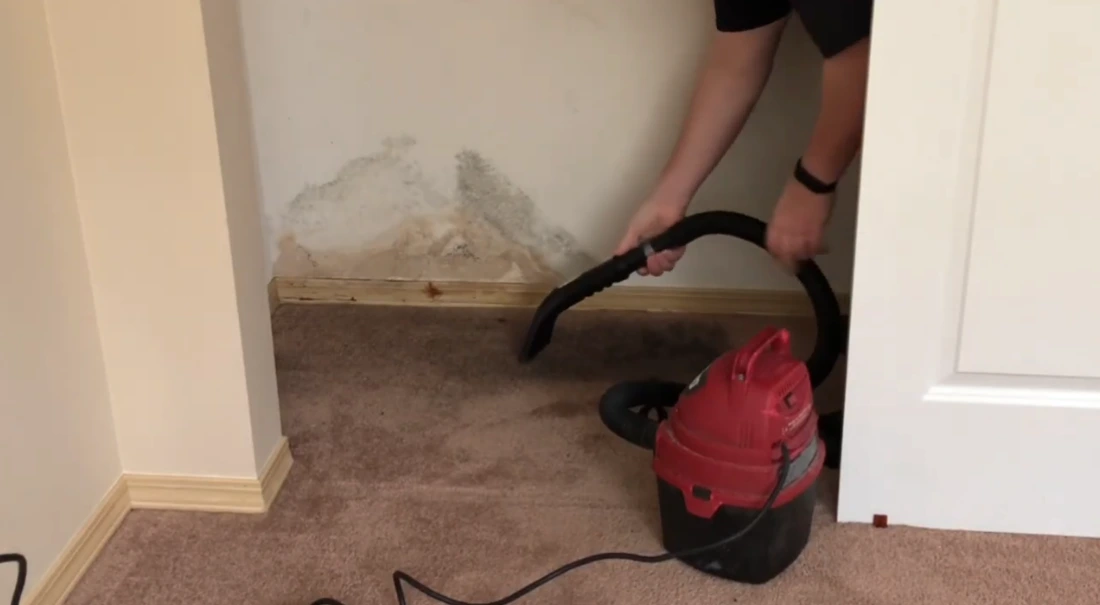
Wet Carpet and Mold FAQ — Medford, Oregon
Professional Extraction — Dry in Hours, Not Days
Truck-mounted extraction with dry stroke technique. Carpet dry in 2–4 hours in Medford summer. No over-saturation. No mold risk.
← All Blog Posts