
Can Carpet Cleaning Kill Fleas and Dust Mites?
Yes — professional carpet cleaning kills fleas in the carpet, including eggs and larvae, through heat (195°F extraction) and mechanical extraction. Dust mites are also significantly reduced — both killed by heat and removed by extraction. However, for flea infestations, carpet cleaning is one essential step in a complete plan that also requires treating pets and other home surfaces simultaneously.
Two of the most common pest-related carpet cleaning questions we get in Medford both start with “can carpet cleaning kill…” — and both have a similar answer: yes, with important caveats most articles don’t tell you. This guide covers both in full — what hot water extraction actually does to fleas and dust mites, why carpet cleaning alone isn’t enough for a flea infestation, and the Rogue Valley-specific seasonal context relevant for Jackson County homeowners.
Carpet Cleaning and Fleas — The Honest Answer
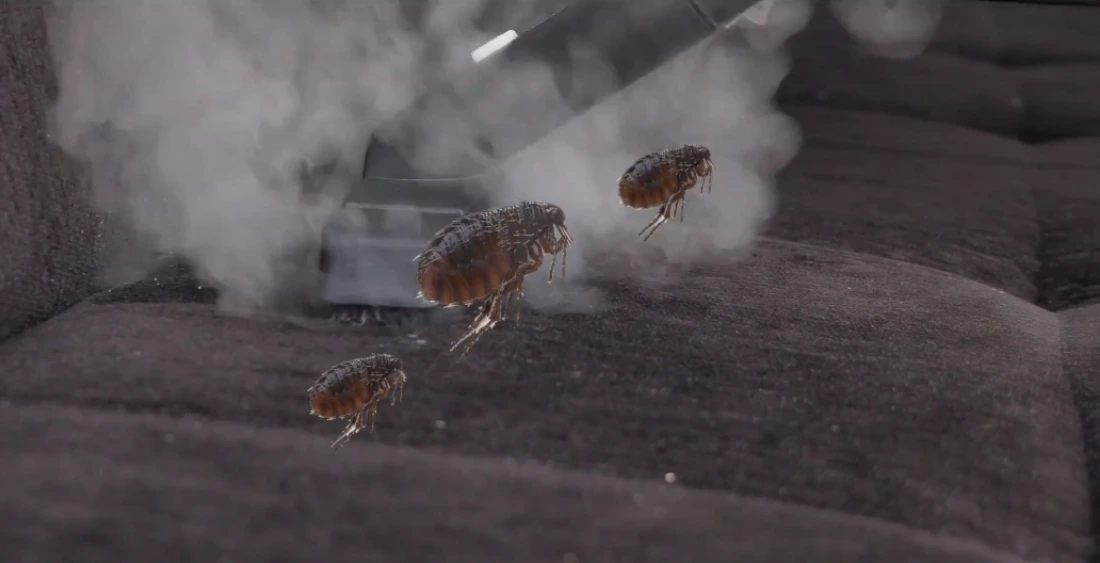
Does carpet cleaning kill fleas, eggs, and larvae? Hot water extraction at 195°F kills adult fleas, flea eggs, and flea larvae on contact. Adult fleas die above 100°F, eggs and larvae at similar thresholds. High-temperature water plus mechanical extraction force (physically removing fleas and debris from the pile) makes professional cleaning highly effective at reducing flea populations in carpet. What’s extracted: adult fleas, flea eggs (white, about 1mm, often mistaken for salt grains), flea larvae (small, pale, worm-like), and flea feces — “flea dirt,” dark specks of dried blood — all present in the lower pile and primary backing.
Why isn’t carpet cleaning enough to eliminate a flea infestation?
Because roughly 95% of a flea infestation doesn’t live in the carpet at any given moment. Adult fleas mostly stay on the host pet; eggs are laid on the pet and drop off into carpet, furniture, and bedding; larvae live in carpet, furniture, cracks, and yard debris; pupae stay cocooned in carpet and furniture, highly resistant to both pesticides and cleaning because the cocoon is a physical barrier. Pupae can survive carpet cleaning in some cases, remain dormant for weeks, then hatch when CO2 from a warm-blooded host stimulates emergence. This is why homes cleaned and vacuumed repeatedly still have flea problems — the pupal stage keeps reintroducing adults.
Understanding the Flea Life Cycle in Carpet
This section explains why flea control requires multiple simultaneous approaches. Understanding the life cycle is what separates effective flea management from a revolving door of treatments that don’t fully resolve the infestation.
Stage 1 — Eggs (about 50% of infestation)
High kill rateLaid on the host, fall off into carpet, furniture, and bedding. A female flea lays 40–50 eggs per day. Smooth, oval, white, about 0.5mm — they slide into pile easily. Hot water extraction physically removes and kills eggs effectively.
Stage 2 — Larvae (about 35% of infestation)
High (carpet) / Low (under furniture, cracks)Avoid light, move deep into pile, under furniture, and into flooring cracks. Feed on flea feces and organic debris. In Rogue Valley’s darker winter months (November–February), larvae can penetrate deeper due to reduced light repulsion. Extraction reaches larvae in the pile but is less effective under furniture and in cracks.
Stage 3 — Pupae (about 10% of infestation)
Moderate kill rateCocooned using environmental debris including carpet fibers, giving significant physical protection. Can remain dormant for months, hatching when they detect warmth, vibration, or CO2 from a nearby host. Extraction removes some pupae mechanically and heat penetrates some cocoons, but this is the hardest stage to fully address.
Stage 4 — Adults (about 5% of infestation)
High kill rateFound in carpet after jumping from the host or newly hatched, they seek a host within seconds. Professional cleaning extracts adults effectively.
Carpet Cleaning and Dust Mites — A Different Story
Does professional carpet cleaning reduce dust mites? Yes, significantly. 195°F extraction kills dust mites throughout the pile. Unlike fleas, dust mites have no pupal stage or host-dependent life cycle taking them outside the carpet — they live, breed, and die entirely in carpet fibers, mattresses, and upholstered furniture. The thermal kill point for the two Oregon-dominant species (Dermatophagoides pteronyssinus and D. farinae) is around 130°F, well below our 195°F extraction temperature. A professional clean kills the vast majority present.
If cleaning kills dust mites, why might allergies still be triggered? Because the allergen isn’t the mite itself — it’s dust mite feces and body fragments. A killed mite still leaves allergens behind. Extraction removes live mites, dead mites, feces, and fragments through mechanical extraction plus high-temperature rinsing, which is genuinely effective allergen reduction. But the carpet doesn’t stay mite-free; mites repopulate from surrounding environments like mattresses and upholstery within weeks to months.
For dust mite allergy management in Medford homes, carpet cleaning is high-impact but not permanent. Combine it with HEPA vacuuming (twice weekly for allergy sufferers), dust mite covers on mattresses and pillows, and indoor humidity kept below 50% for sustained reduction. In Rogue Valley summer heat (90–110°F, low humidity) populations naturally decline; in the winter indoor season, with heated homes and closed windows, they proliferate.
Medford’s Allergy Season — Dust Mites in Context
Seasonal ContextWhen are dust mite allergen levels highest in Jackson County homes? Two peak allergen windows matter for scheduling. Spring (March–June) is pollen-dominant — the Rogue Valley’s high pear orchard density in the Bear Creek Valley, plus native oak and grass vegetation, creates some of Oregon’s highest pollen counts, peaking in April around Pear Blossom Festival timing; carpet accumulates pollen alongside dust mite allergens. Winter (November–March) is dust mite-dominant — heated homes, closed windows, reduced humidity control, and extended indoor time create optimal breeding conditions, and Jackson County’s temperature inversions trap households indoors longer than flat-valley cities, intensifying indoor allergen exposure.
Optimal Medford cleaning windows for dust mite control: late April or May addresses full spring allergen accumulation (pollen plus dust mites) before summer heat and open-window season, resetting the baseline for summer. October or November addresses summer accumulation (wildfire smoke, dust mites, and trail soil) before winter indoor season begins — the single most impactful clean for allergy households. See our pollen-specific guide for more.
The Complete Flea Control Plan — Carpet Is One Step
If you have a flea infestation and are considering carpet cleaning, here’s the complete protocol that actually works. Carpet cleaning alone reduces the infestation significantly but won’t eliminate it — these steps need to happen simultaneously.
- 1
Treat the pet first
Same day as (or before) carpet cleaning, every household pet needs vet-recommended flea treatment — topical monthly like Frontline or Advantage, oral medication, or a flea bath. Treating the environment without the host gives only temporary results; the pet is where new eggs originate.
- 2
Treat the carpet professionally
195°F hot water extraction the same day as pet treatment, addressing egg, larval, and adult populations simultaneously with pet treatment and preventing the re-deposition cycle.
- 3
Treat upholstered furniture
Sofas, chairs, and pet beds are secondary flea environments; an IGR-based (insect growth regulator) spray is more effective than contact pesticides alone. Our upholstery cleaning can be done the same visit.
- 4
Treat outdoor areas where pets spend time
Relevant for Medford’s outdoor culture — yard, deck, Bear Creek Greenway routes — where perimeter sprays or diatomaceous earth in high-use areas reduce reinfestation.
- 5
Vacuum daily for 2–3 weeks after treatment
Vibration stimulates pupae to hatch, mimicking a host walking past. Daily vacuuming cycles pupae through the hatch stimulus, exposing newly hatched adults to residual IGR and progressively reducing the dormant population. Discard bags or empty the canister outside each time.
The Dust Mite Reduction Plan for Medford Homes
1. Professional carpet cleaning (primary)
195°F truck-mounted extraction kills the vast majority of mites and removes allergens. Schedule spring and fall for optimal management.
2. HEPA vacuuming between professional cleans
A HEPA filter removes surface feces and fragments between cleans — standard filters let allergen particles pass through and re-deposit. Twice weekly for allergy households, once weekly for maintenance.
3. Humidity management
Mites need 70–80% relative humidity to thrive; keeping indoor humidity below 50% reduces breeding. Medford summer, often 20–30% RH outdoors, achieves this naturally with ventilation; winter needs a bedroom dehumidifier as the most effective supplement.
4. Mattress and pillow encasements
Mattresses hold the highest mite populations of any household surface; allergen-proof encasements prevent access to breeding material. Combined with professional carpet cleaning, this produces the most significant measurable allergen reduction for Jackson County allergy sufferers.
Fleas & Dust Mites FAQ — Medford, Oregon
Flea Problem or Allergy Season? We Can Help.
Truck-mounted extraction at 195°F for Medford and Jackson County homes. Part of a complete plan that actually works.
← All Blog Posts