
5 Common Carpet Cleaning Mistakes Medford Homeowners Make
The five most common carpet cleaning mistakes Medford homeowners make: scrubbing stains instead of blotting, vacuuming damp carpet, over-wetting with rental machines, using the wrong cleaning product for their fiber type, and waiting too long between professional cleans. Each one either damages the carpet fiber, sets the stain permanently, or accelerates re-soiling. Here’s the fix for each.
Why Carpet Mistakes Cost More Here Than in Most Oregon Cities
Why does it matter more to get carpet care right in Medford specifically? Carpet mistakes are universal — every homeowner makes at least one. But in Medford and the Rogue Valley, the consequences tend to be worse than in other markets. The combination of volcanic clay soil tracked in from Table Rocks and the Bear Creek Greenway, annual wildfire smoke seasons that deposit fine particulate into carpet fiber, above-average pet ownership across Jackson County, and Jackson County’s moderately hard water (which makes some spot treatments backfire) means errors compound faster here. A scrubbing mistake on a carpet in a milder climate might create a slightly distorted patch. The same scrubbing on a Medford carpet that’s already holding volcanic clay in the pile creates a soil concentration point that’s harder to address with any subsequent cleaning.
Here are the five mistakes we see most often in Medford homes — and the exact fix for each.
Scrubbing Stains Instead of Blotting
A spill happens, and the instinct is to scrub — apply product and work it into the pile. Every carpet cleaning professional has seen the result: a stain that may have been removable is now spread wider, the pile is distorted at the scrub site, and the fiber surface has been abrade-damaged. Scrubbing drives contamination deeper into the pile structure and physically damages the fiber — particularly relevant for nylon and polyester carpets, where the fiber has a smooth surface that abrasion permanently dulls.
In Medford homes specifically, scrubbing red wine or tomato sauce into carpet that’s already holding volcanic clay from trail tracking creates a compound stain that the red mineral pigmentation intensifies. The result is harder to address professionally than a fresh, scrub-free spill would have been. What’s the correct way to treat a carpet spill in a Medford home?
Blot — never scrub. Use a clean white cloth (colored cloth can transfer dye) and press firmly downward, then lift and move to a clean section of the cloth. Work from the outside of the spill inward to prevent spreading. For solids, scoop or scrape first with a spoon or flat edge before applying any moisture. For stubborn stains after blotting, apply a small amount of appropriate spot treatment, allow 2–3 minutes of dwell time, then blot again — never scrub.
Vacuuming Damp or Wet Carpet
After a spill or a wet-cleaning attempt, the instinct is to vacuum once the carpet appears mostly dry. The problem is that most household vacuums aren’t designed for moisture extraction. Running a standard upright or canister vacuum over damp carpet pulls moisture into the motor and filtration system — damaging the vacuum — and can push soil from the surface back into the pile as a slurry. The rotating brush bar on most standard vacuums can also distort fiber that’s still damp.
This is different from the professional pre-vacuum step done before carpet cleaning, which is always performed on dry carpet. Never vacuum carpet that has any remaining moisture from a spill or cleaning attempt. When is it safe to vacuum carpet after it’s been cleaned or had a spill?
Wait for complete drying before vacuuming. Use the white cloth test: press a clean white cloth firmly against the carpet for 10 seconds — if no moisture transfers, it’s dry enough to vacuum. After professional cleaning, that’s typically 2–4 hours in Medford summer conditions and 6–8 hours in winter. After a home spill treated with blotting, wait at least an hour, then run the cloth test before vacuuming.
Over-Wetting with a DIY Rental Machine
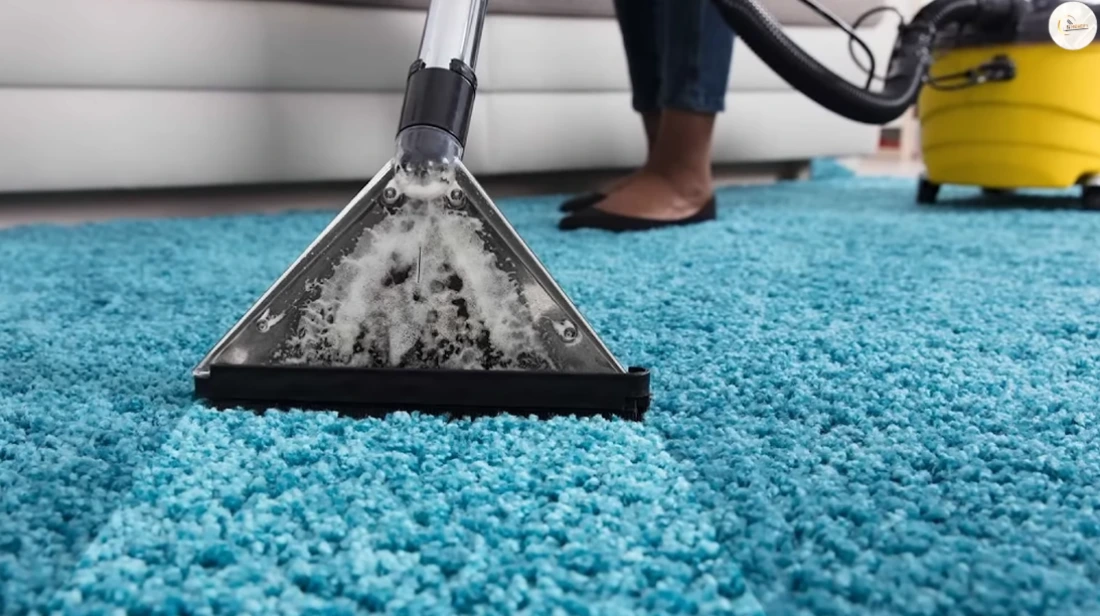
Rental carpet cleaning machines inject water and cleaning solution into the pile and attempt to extract it — and the key word is attempt. These machines inject adequately but extract at a fraction of the power of professional truck-mounted equipment, which is one of several reasons professional carpet cleaning outperforms a rented machine. The result is carpet that looks cleaner at the surface but has significant residual moisture in the backing — sometimes taking 12–24 hours to fully dry.
During that extended drying window in a Medford home, foot traffic from kids and pets deposits new soil into wet, open carpet fiber before it closes back up. The damp backing is also the environment where mold risk begins if drying stretches out during Rogue Valley temperature inversions in winter — see our guide to wet carpet and mold risk for the full picture. How do I avoid over-wetting carpet when cleaning at home?
If you’re using a rental machine, make slow passes since the machine extracts more when moving slowly, then make an additional extraction-only pass with no water over each section before moving on. Plan for 12–24 hours before foot traffic, open windows when air quality allows, and run ceiling fans. Avoid cleaning in the late afternoon on winter days, since evening temperature drops in the Rogue Valley will extend drying time significantly. For anything beyond light surface cleaning, weigh the trade-off — see whether professional cleaning is worth it compared to the extended drying window of a rental machine.
Using the Wrong Cleaning Product for the Fiber Type
The most common product mismatch we see in Medford homes is using an all-purpose cleaner, dish soap, or alkaline oxygen-boost product on a wool rug or wool-blend carpet. Wool is a protein fiber with a natural pH preference of roughly 4.5–7. Alkaline chemistry above pH 7 begins breaking down wool’s protein bonds and can cause permanent dye shift, felting, or both. How do I know which cleaning product is safe for my carpet fiber?
Other mismatches we see often in Jackson County homes: using a synthetic-fiber spot spray on a wool area rug (many local homes have both wall-to-wall nylon and a wool rug layered on top), applying vinegar to treat pet stains when it’s too weak to address the uric acid chemistry involved, and using hard tap water for wool spot treatment — Jackson County’s water is moderately hard, and mineral deposits left behind when it evaporates create “tide mark” rings on wool that compound with each treatment.
Identify your fiber type first — check the manufacturer’s label, a corner of carpet away from traffic, or call us and we’ll tell you from a description. Nylon and polyester tolerate most commercial carpet spot cleaners. Wool and wool-blend need pH-neutral, wool-safe products and distilled water rather than tap water. For pet stains on any fiber, consumer enzyme products handle fresh accidents, but anything set-in or involving cat urine needs a professional — see our guide on whether carpet cleaning removes pet urine for the full breakdown.
Waiting Too Long Between Professional Cleans
The most expensive mistake on this list is the one that happens slowly enough that you don’t notice it happening. Most Medford homeowners have their carpets cleaned professionally every 2–5 years, or only when there’s a visible problem. By the time carpet looks dirty enough to clean, it has typically been holding a significant abrasive soil load for 12–24 months — and volcanic clay tracked in from Table Rocks and the Bear Creek Greenway is more abrasive to carpet fiber than ordinary household dust, grinding against the pile with every footstep during that entire period.
The result isn’t just carpet that looks dirty — it’s carpet with measurably reduced fiber integrity that reaches replacement-level condition years earlier than it would with regular maintenance. How often should Medford homeowners have carpets professionally cleaned?
Annual professional cleaning is the minimum for most Medford households, and twice yearly is better for homes with pets, regular trail access around Table Rocks, Bear Creek, or Roxy Ann Peak, or recent wildfire smoke exposure. A schedule that works well for Jackson County homes: a spring clean in April or May, after mud season and pollen peak and before wildfire season begins, and a fall clean in October, after smoke season ends and before the winter indoor season begins. See our full breakdown of how often to clean carpet in Medford, and our take on whether regular professional cleaning is worth the cost compared to premature carpet replacement.
The mistakes on this list aren’t about carelessness — they’re about instincts that work fine in theory and backfire on real carpet fiber. Blot, don’t scrub. Wait, don’t rush. Match the product, don’t guess.
Bonus — The Medford-Specific Mistake Nobody Talks About
Is there a carpet care mistake that’s specific to living in the Rogue Valley? Yes — and it doesn’t make most national “carpet mistakes” lists because it’s local. In Medford, it’s one of the most common errors we see.
Masking Wildfire Smoke Odor Instead of Treating It
Treating wildfire smoke odor with store-bought deodorizers, baking soda, or consumer sprays — and stopping there — is understandable, since these products often work briefly and reduce the smell for a few days. Then the odor returns.
What’s actually happening: wildfire particulate from Rogue Valley fire events between July and September embeds in carpet fiber at a depth no surface deodorizer or baking soda application can reach. The deodorizer masks the smell at the fiber surface while embedded particles keep off-gassing from deeper in the pile and backing. Once the masking fragrance fades, the underlying smoke smell is still there — sometimes more noticeable because the contrast has changed.
If your home was affected by a Jackson County wildfire smoke event and your carpet has a persistent smoke odor, professional hot water extraction with an oxidizing pre-spray is the only effective consumer-accessible treatment. Don’t spend money on surface products for a problem that sits at pile depth. See our guides on whether carpet cleaning removes wildfire smoke smell and wildfire smoke carpet cleaning in Medford for the full treatment process.
Carpet Cleaning Mistakes FAQ — Medford, Oregon
Avoiding Mistakes Is Easier with a Professional
We pre-inspect, tell you what to expect, and don’t cut the steps that matter. Serving Medford and Jackson County. Call (458) 302-0101 — Mon–Fri 8am–6pm, Sat 9am–4pm
← All Blog Posts